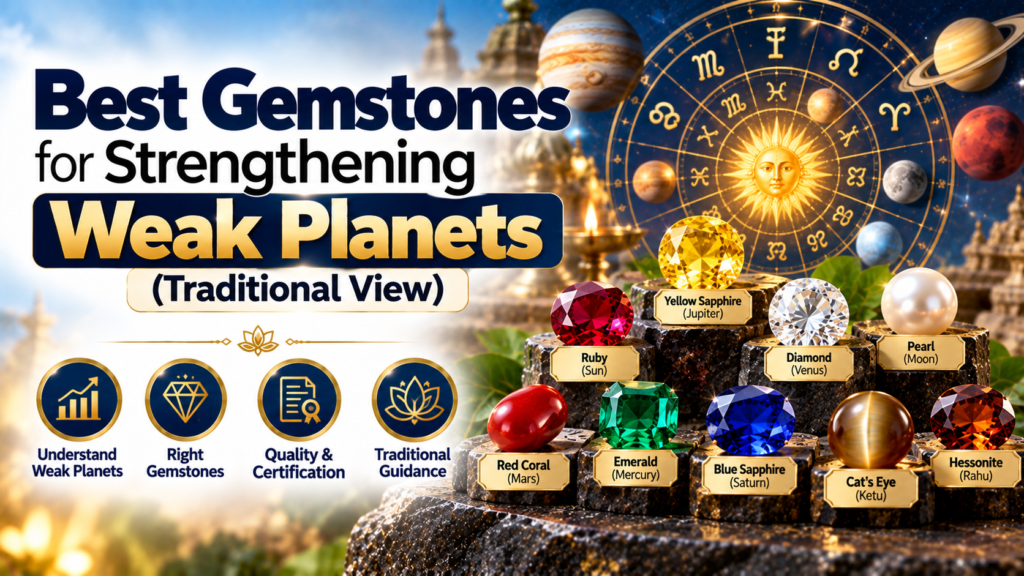
Gemstones for weak planets are one of the most searched topics in Jyotish, and one of the most misunderstood. This guide sets out the traditional planet-gemstone map, explains why chart context matters, and shows how to verify a stone before a significant purchase.
Table of Contents
Traditional Planet–Gemstone Map
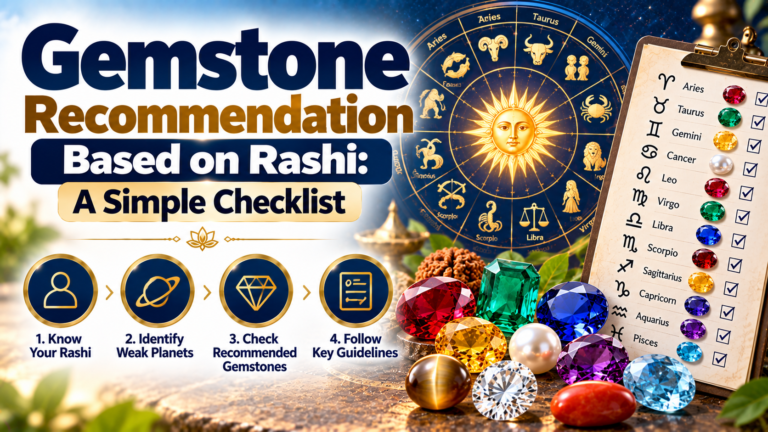
Common associations include Ruby–Sun, Pearl–Moon, Red Coral–Mars, Emerald–Mercury, Yellow Sapphire–Jupiter, Diamond or White Sapphire–Venus, Blue Sapphire–Saturn, Hessonite–Rahu and Cat’s Eye–Ketu. Different schools can differ, especially around which stones are suitable in a specific chart.
Why Weak Does Not Automatically Mean Wear Its Gemstone
A simplified mistake is treating every weak planet as something that should automatically be strengthened. Traditional Jyotish considers the planet’s role, house ownership, placement and relationships with other planets. A practitioner may therefore recommend a different approach depending on the chart.
A debilitated planet can still give strong results when Neecha Bhanga Raja Yoga is present, so check this before buying any stone. Saturn is a live example in 2026 — read Shani in Meena Rashi 2026. For a full approach, see how to choose a gemstone according to your Kundali, or Rudraksha by birth chart as a gentler option.
Use the Chart, Not Fear
Gemstone marketing can become fear-driven: your planet is weak, so something bad will happen unless you buy this stone. A better educational approach explains the traditional reasoning and lets the reader understand what the recommendation is intended to represent.
The Physical Gemstone Still Needs Verification
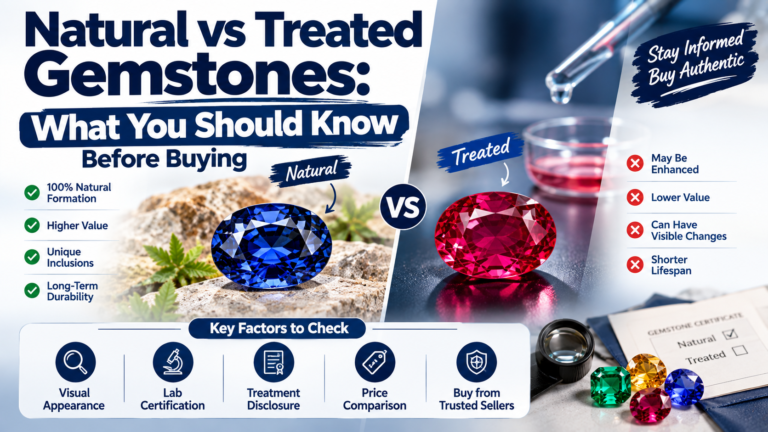
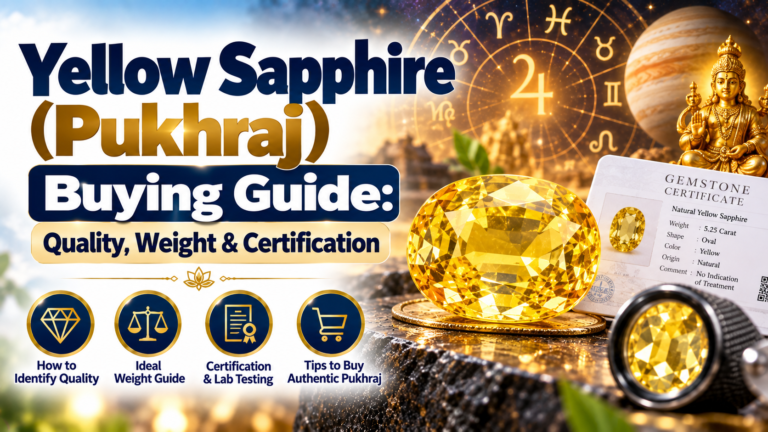
Astrological suitability and gem quality are separate questions. Even if a recommendation points toward Emerald or Yellow Sapphire, the buyer needs to know whether the stone is natural, treated, synthetic or imitation. Certification and seller transparency remain important.
When a High-Value Purchase Deserves Extra Caution
Valuable stones can involve significant spending. Avoid rushed purchases based on immediate danger or guaranteed transformation claims. Ask for the method, product specifications, treatment disclosure and independent documentation where appropriate.
A Better Way to Read Planetary Gemstone Content
A useful page should first explain the traditional concept, then show common planet-stone associations, then explain why chart context matters, and finally move into product verification. This answers the reader without turning the article into a sales pitch.
Understand Your Planets Before Buying
A planet described as weak should be read in the context of the whole chart. Our astrology reports give that wider view so any gemstone decision is based on reasoning rather than fear.
Frequently Asked Questions
Which gemstone is traditionally linked with Jupiter?
Yellow Sapphire or Pukhraj is traditionally associated with Jupiter.
Does a weak planet always mean I should wear its gemstone?
No. Traditional practitioners may consider several chart factors.
Are planetary gemstone effects scientifically proven?
These associations belong to Jyotish tradition.
Should I buy a gemstone because a website says my planet is weak?
Understand the method and verify the stone before a significant purchase.
Can a treated gemstone be used in Jyotish?
Practices vary, so ask the practitioner and seller to disclose treatment.