
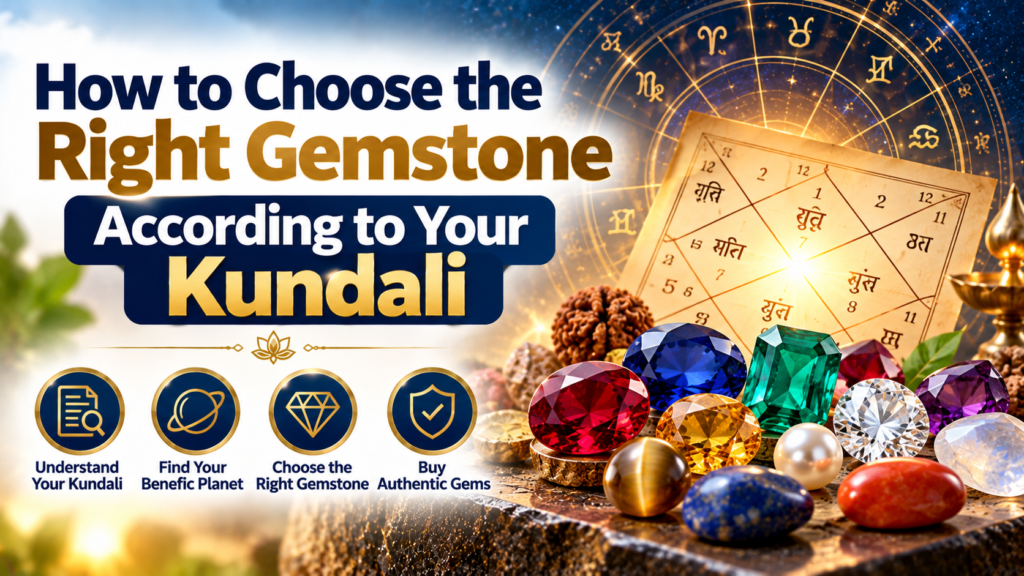
Choosing a gemstone according to Kundali involves two separate questions: why a particular stone is recommended for your chart, and whether the stone you are buying is what it claims to be. This guide walks through both.
Table of Contents
Traditional Planet–Gemstone Associations
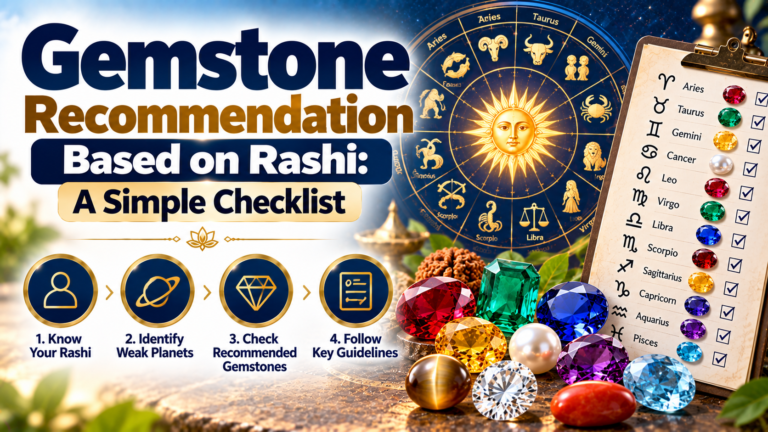
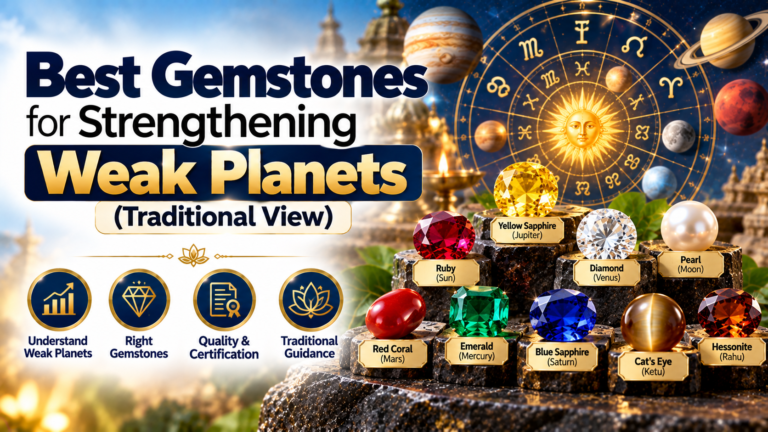
Common Jyotish associations include Sun–Ruby, Moon–Pearl, Mars–Red Coral, Mercury–Emerald, Jupiter–Yellow Sapphire, Venus–Diamond or White Sapphire, Saturn–Blue Sapphire, Rahu–Hessonite and Ketu–Cat’s Eye. Different schools can vary in interpretation.
These are traditional associations, not scientific claims that gemstones alter planetary forces.
Why the Kundali Matters
A full Kundali is used within Jyotish to interpret relationships between planets and houses. The same gemstone can therefore receive different recommendations for different charts. If a seller recommends an expensive gemstone without asking for any birth details, ask what method is being used.
Two chart factors change most recommendations: how weak a planet really is and whether Neecha Bhanga Raja Yoga cancels a debilitation. If you generated your chart online, read what an AI Kundali can and cannot tell you. Some astrologers prefer beads over stones — see which Rudraksha suits your birth chart.
A Practical Way to Approach a Recommendation
Start by identifying the purpose: career, education, relationships, spiritual practice or another traditional goal. Then ask which chart factors support the recommendation. Finally evaluate the physical quality of the stone separately.
Do Not Let the Astrology Question Hide the Product Question
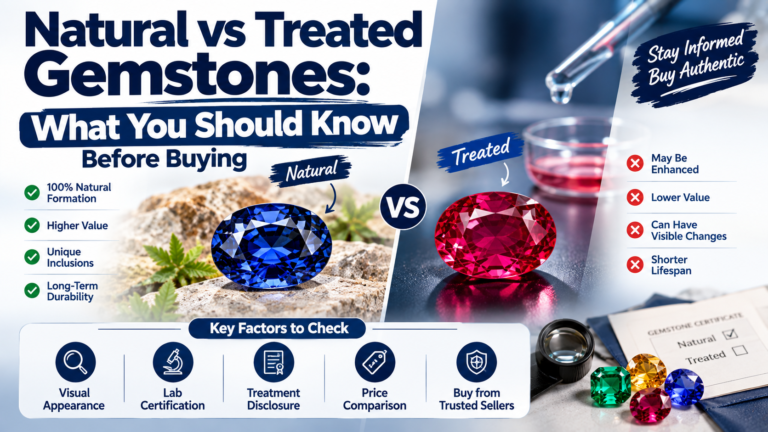
Even a well-explained traditional recommendation does not tell you whether the stone is natural, treated, synthetic or imitation. Those are gemological questions. Ask both: Why this gemstone? And what exactly am I buying?
Quality Factors That Matter
Depending on the stone, consider natural origin, treatment, clarity, colour, transparency, inclusions, cut, weight and laboratory documentation. There is no single visual rule for every gemstone. A credible laboratory report can help establish identity and disclose treatments where tested.
Why Expensive Is Not the Same as Suitable
A high-value gemstone is not automatically more appropriate for a chart. Suitability and gem quality are different dimensions. Set a budget before shopping and compare documentation and specifications instead of allowing urgency or fear-based sales language to determine the purchase.
What a Good Product Page Should Tell You
A useful page should state the gemstone name, whether it is natural or synthetic, known treatments, approximate weight and dimensions, origin if known, certification information, return terms and product photographs.
Start With Your Kundali
Before investing in a gemstone, understand the reasoning behind the recommendation. Our astrology reports give a chart-based view you can discuss with a practitioner before you buy.
Frequently Asked Questions
Can a gemstone be selected from a Kundali?
Yes, traditional Jyotish practices use birth-chart factors for gemstone recommendations.
Is Rashi enough?
A full Kundali provides more context within traditional Jyotish.
Are Jyotish gemstone effects scientifically proven?
They belong to astrological tradition and should not be presented as established scientific mechanisms.
Should I verify a gemstone separately?
Yes. Gem identification, treatment and quality are separate from astrological reasoning.
Why is certification important?
A credible report can help document identity and tested characteristics.