
Understanding natural vs treated gemstones is the first step to buying with confidence. This guide explains the four categories you will meet in listings, natural, treated, synthetic and imitation, and how certification and the right questions protect your purchase.
Table of Contents
What Is a Natural Gemstone?
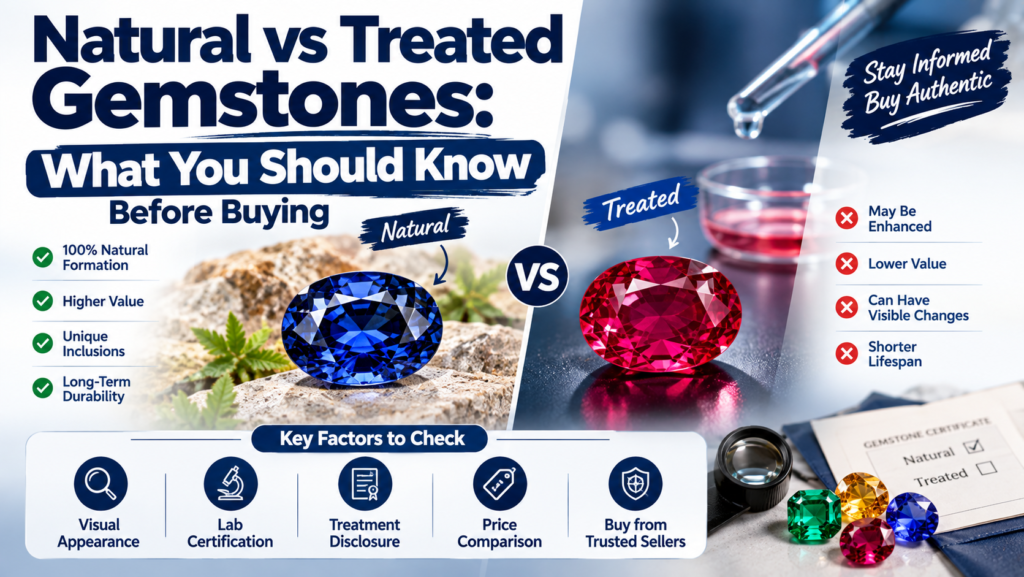
A natural gemstone is material formed through natural geological processes. Natural stones can still have treatments. Therefore, natural does not automatically mean untreated. If untreated status matters to you, it should be specifically disclosed and, for valuable stones, supported by appropriate documentation.
What Is a Treated Gemstone?
Treatment means a process has been applied to a gemstone to improve colour, clarity, durability or appearance. Treatments are common across the trade. The important issue for buyers is disclosure: know what you are purchasing and how treatment may affect value, care and traditional use.
What Is a Synthetic Gemstone?
Synthetic gemstones are laboratory-grown materials that can share the same chemical composition and crystal structure as their natural counterparts. They are not the same as natural stones simply because they look similar. A seller should clearly identify synthetic material.
What Is an Imitation Gemstone?
An imitation is a material made to resemble a gemstone without being the same gem material. Glass and other substitutes can fall into this category. The issue is not that every imitation is automatically bad; the issue is whether it is honestly sold as what it is.
How Certification Helps
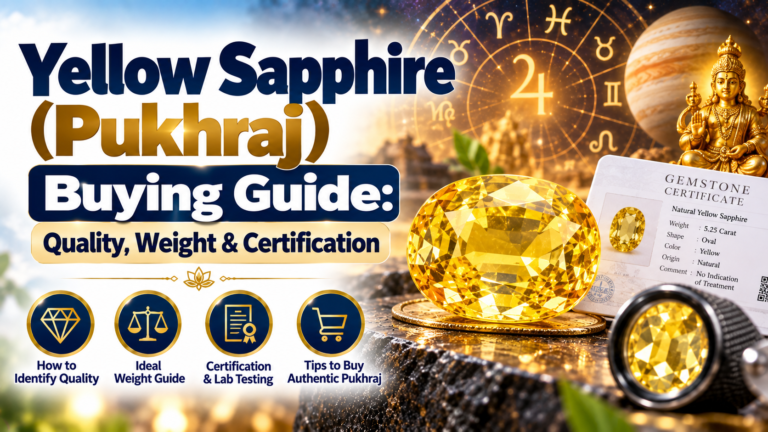
A credible laboratory report can help establish identity and disclose tested treatments or synthetic status. Buyers should verify that the report belongs to the exact stone being sold. Certified in a product title is not enough by itself.
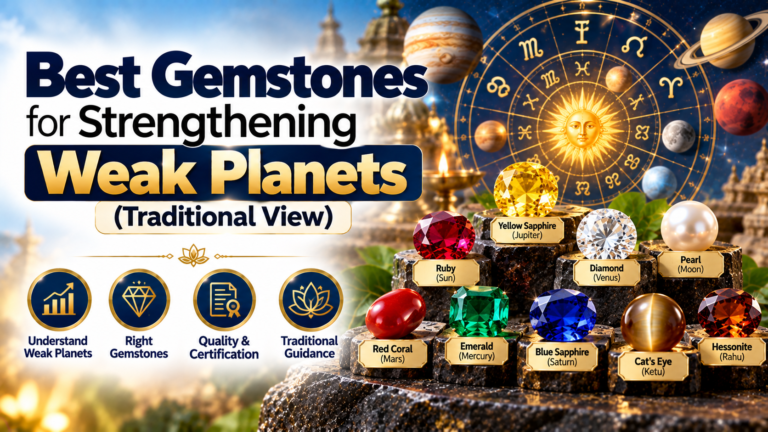
Certificates work the same way for beads: if you are buying Rudraksha rather than a stone, use our original Rudraksha mala checklist. And before you verify the stone, be clear about which planet the gemstone is meant to support.
Questions to Ask Before Paying
Ask whether the stone is natural, treated, synthetic or imitation; what treatment was used; which laboratory tested it; what the report number is; whether the report matches the exact stone; and what the return policy is.
Why Photos Are Not Enough
Photography communicates appearance but cannot reliably establish all gemological characteristics. Lighting and camera processing can change how a stone looks. For higher-value purchases, independent documentation is more useful than a beautiful photograph alone.
How This Affects Jyotish Buyers
People purchasing gemstones for traditional astrological practice may have additional preferences about natural or untreated stones. Those preferences vary between traditions. If untreated status is required for your practice, state that requirement before buying and ask for documentation.
Pair Gem Knowledge With Chart Guidance
If you are buying a gemstone for Jyotish practice, the stone’s identity is only half the decision. Our astrology reports cover the other half: why a particular gemstone may be suggested for your chart.
Frequently Asked Questions
Does natural mean untreated?
No. A natural gemstone can undergo treatment.
What is a synthetic gemstone?
It is laboratory-grown material that can have the same chemical composition and crystal structure as a natural counterpart.
Are treated gemstones fake?
No. Treatment does not automatically make a gemstone fake; disclosure matters.
Can I identify treatment from a photograph?
Not reliably. Professional testing may be required.
Why is a lab certificate useful?
It can provide independent information about identity and tested characteristics.