
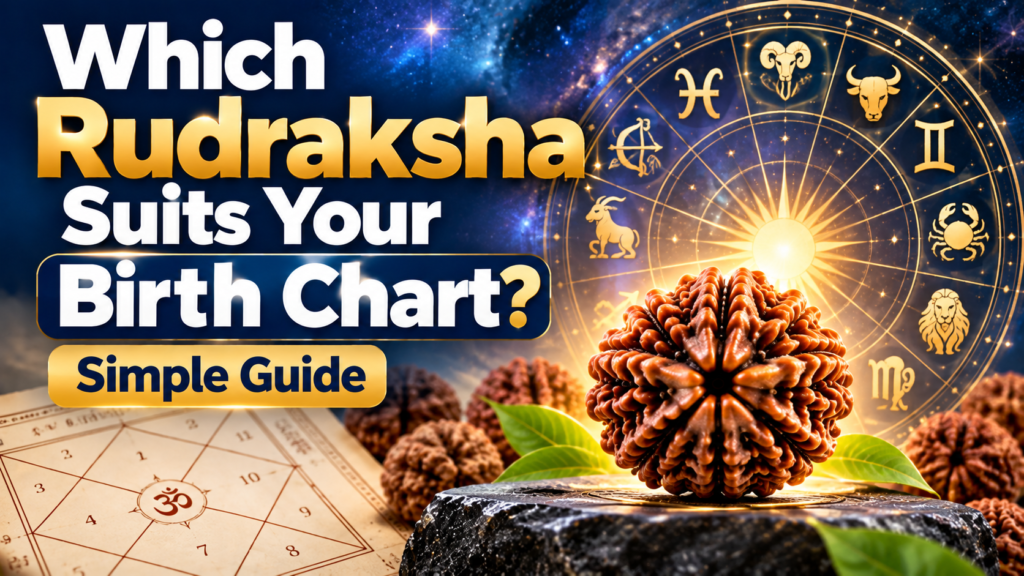
Selecting a Rudraksha according to birth chart is a traditional Jyotish approach that looks beyond a single zodiac sign. This guide explains what a Kundali-based method considers, why recommendations differ, and how to evaluate both the advice and the bead itself.
Table of Contents
Why a Birth Chart Changes the Question
A birth chart can contain more information than a single zodiac label. Within Jyotish traditions, practitioners may consider planetary placements, houses, aspects and other factors. Different schools can interpret the same chart differently, so a responsible recommendation should explain its reasoning.
Rashi Is Not the Whole Kundali
Rashi-based recommendations are easy to understand, but a full Kundali provides a broader framework. This does not make astrology scientifically verified; it explains why traditional practitioners may not give identical recommendations to everyone with the same Rashi.
Your Rashi is only one part of the picture — our Rashi-based gemstone checklist shows the same limit for stones. If a gemstone is recommended instead of a bead, the same chart logic applies: how to choose a gemstone according to your Kundali. For calmness rather than a specific planet, see Rudraksha for peace of mind.
What a Traditional Selection Process May Consider
A practitioner may examine the purpose behind wearing Rudraksha, the birth chart, relevant planetary symbolism and the Mukhi traditionally associated with the intended quality. Different schools can differ in method.
The Intention Should Come Before the Product
Ask what you actually want the practice to support: meditation, discipline, study, confidence, a sense of protection or a traditional planetary practice. A chart can provide context, but it should not replace a clear purpose.
Questions to Ask a Practitioner or Seller
Ask which chart details were used, which tradition or method is being followed, why the Mukhi was selected, whether alternatives were considered and what the recommendation is intended to represent. A recommendation is easier to evaluate when the reasoning is explained.
Do Not Confuse Personalization With Certainty
Personalization can make a spiritual practice more meaningful, but it does not turn a traditional belief into a guaranteed outcome. Be particularly cautious with promises involving health, wealth, marriage, legal outcomes or specific future events.
Birth Details and Accuracy
Traditional chart calculations generally rely on accurate birth date, time and place. If the birth time is uncertain, interpretations can vary depending on the method. This is another reason not to buy a high-priced bead solely because a generic page says it is your Rashi Rudraksha.
A Simple Decision Path
First define the intention. Second decide whether you want general traditional guidance or a chart-based approach. Third understand the reasoning. Fourth verify the physical product. Finally choose a routine you can follow consistently.
Get a Chart-Based Perspective
If you would like a recommendation built on your full Kundali, explore our astrology reports. Once you know which Mukhi you are looking for, browse our Rudraksha collection.
Frequently Asked Questions
Can Rudraksha be selected from a birth chart?
Yes, some Jyotish traditions use chart-based factors when recommending Rudraksha.
Is Rashi enough?
A Rashi-only method is simpler, while a full Kundali can provide more context.
Do I need an exact birth time?
Traditional chart calculations generally rely on accurate birth details.
Can Rudraksha change my future?
Specific future outcomes should not be presented as guaranteed.
Should I buy an expensive Rudraksha after a generic recommendation?
Understand the recommendation and verify the product first.