

This Yellow Sapphire buying guide is for anyone considering Pukhraj, whether for Jyotish practice or as a gemstone purchase. It explains natural, treated and synthetic stones, how colour, weight and certification affect value, and what to ask a seller before you pay.
Table of Contents
What Pukhraj Means in the Jyotish Context
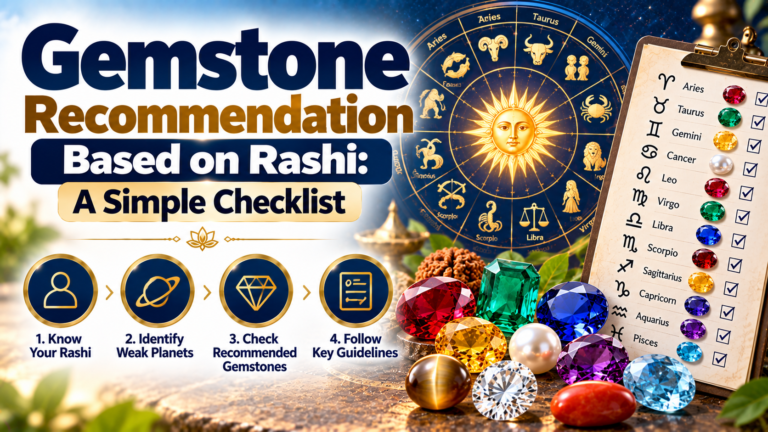
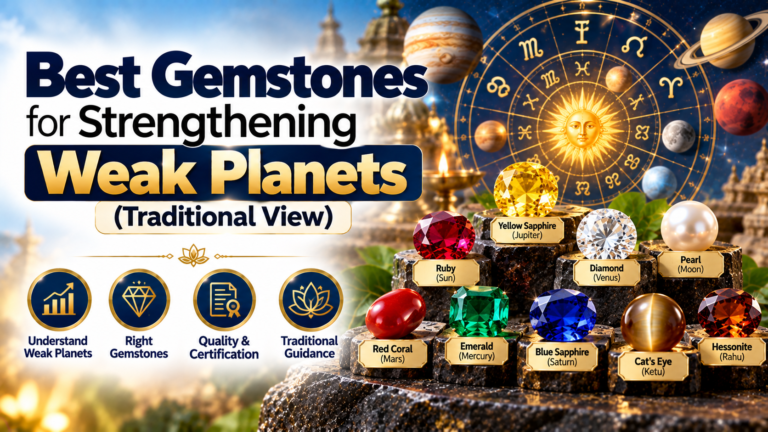
Traditional Jyotish commonly associates Yellow Sapphire with Jupiter or Brihaspati. Some practitioners recommend it based on chart-specific considerations. That recommendation belongs to an astrological framework and should not be presented as a guarantee of wealth, marriage, career success or another life outcome.
Pukhraj is tied to Jupiter, and Jupiter leaves its exaltation sign on 31 October 2026 — read what the end of Guru’s exaltation means. If Jupiter is weak in your chart, see gemstones for weak planets; for relationship questions, see can a gemstone support your love life.
Natural, Treated and Synthetic Are Different Categories
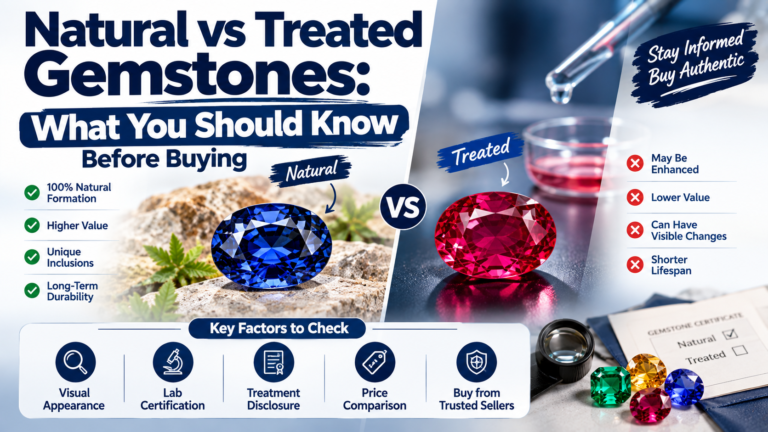
A natural gemstone is formed in nature. A treated stone is natural material that has undergone a process to improve appearance or other characteristics. A synthetic stone is laboratory-grown material with essentially the same chemical composition and crystal structure as its natural counterpart. Imitation materials are different again.
Colour and Appearance
Yellow Sapphires can show different shades of yellow. Buyers should not rely on claims such as only one shade is original. Identity, treatment status, transparency, inclusions and overall quality should be considered together.
How Much Pukhraj Should You Buy?
Weight recommendations in Jyotish can vary by tradition and practitioner. Gemologically, weight also affects price. Instead of selecting a carat weight only because a seller says more is always better, ask what traditional method is being used and whether the stone meets your budget and quality requirements.
Why Certification Matters
For a valuable gemstone, an independent laboratory report can provide useful evidence about identity and, depending on the report, natural versus synthetic status and treatments. Read the report rather than relying on the word certified in a product title.
Pricing Without Getting Trapped by One Number
Pukhraj prices vary based on quality, size, origin, treatment, colour, clarity, certification and market demand. Two stones with the same carat weight can have very different values. Compare documentation and gemological characteristics before deciding whether a price is reasonable.
Buying Online: Questions Worth Asking
Ask for front and back photographs, exact weight, dimensions, treatment disclosure, certificate details, return terms and whether the delivered stone matches the photographed stone. If the seller refuses basic documentation for a high-value stone, slow down before paying.
Setting and Wearing Considerations
Traditional wearing instructions may specify metal, finger and day depending on the practitioner’s method. These are part of Jyotish practice rather than universal gemological rules. If you are following a particular tradition, get the method from the practitioner who made the recommendation and keep the physical setting secure.
Confirm the Recommendation First
Pukhraj is usually recommended after a chart review. If you have not had one, our astrology reports can help you understand whether Jupiter-related remedies are being suggested for your chart before you spend on a stone.
Frequently Asked Questions
What is Pukhraj?
Pukhraj is the common Indian market name for Yellow Sapphire, traditionally associated with Jupiter in Jyotish.
Should Pukhraj be selected according to Kundali?
Many practitioners recommend it after considering the birth chart.
Is a treated Yellow Sapphire still a real gemstone?
Treatment and identity are separate issues; a natural stone can be treated.
Why should Pukhraj have a laboratory report?
A credible report can help document identity and tested characteristics.
Does a bigger Pukhraj always mean better results?
There is no universal basis for presenting size as a guaranteed result.