
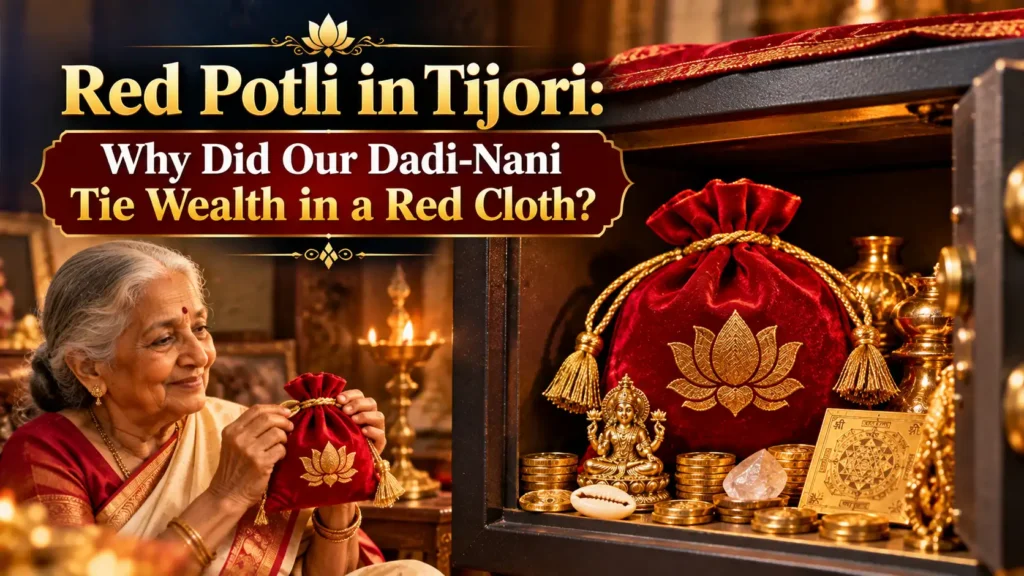
Open your grandmother’s old almirah and there is a good chance you’ll find one: a small red potli in the tijori, tied tight, tucked behind the jewellery box. Ask what’s inside and you’ll probably hear, “Laxmi ji ka saamaan hai, haath mat lagao.”
Diwali 2026: Many families refresh the tijori potli on Lakshmi Puja day, which falls on Sunday, 8 November 2026. Check the Diwali 2026 Lakshmi Puja muhurat for your city.
So what was in it? And why red, why tied, and why always hidden in the tijori? Let’s open the bundle.
Table of Contents
A Bank Before There Were Banks
For centuries, most Indian households kept their wealth at home. Coins, gold and grain had to be guarded, and the tijori was the family’s treasury. The potli was the small, sacred part of that treasury. It held things that were not valuable in rupees but were considered valuable in faith: symbols that kept barkat in the home.
Tying them in cloth did a practical job too. It kept small items together, clean and away from little hands.
Why Is the Potli Always Red?
In Indian tradition, red is the colour of shubh beginnings. It is the colour of sindoor, of the bride’s saree, of the cloth laid out under a kalash in puja. Maa Laxmi herself is often shown in red. A red potli marked its contents as auspicious and set them apart from everyday things.
What Our Elders Actually Kept Inside the Potli
The exact contents changed from family to family, but a few Diwali tijori items show up again and again:
Kaudi (Cowrie Shells)
Cowries were used as money in parts of India for centuries. A shell that once was currency became a lasting symbol of wealth.
Kamal Gatta (Lotus Seeds)
Maa Laxmi sits on a lotus. Her seat’s seeds became a favourite offering.
Gomti Chakra
Small, naturally patterned stones, valued as bringers of peace and steady fortune.
A Coin or Two
Often an old silver coin, sometimes one bought on Dhanteras.
None of these were bought for their price. They were kept as reminders: that money should come with stability, that it should stay, and that it should be treated with respect.
Why the Potli Is Quietly Disappearing
Today most of us use bank lockers and UPI. The family member who knew which items went in the potli, and why, is often no longer around to ask. Many people now want to keep the tradition but don’t know where to buy real kamal gatta or gomti chakra, or what goes together.
What to Keep in the Tijori for Money This Diwali
If you’re starting a potli of your own, the traditional core is simple:
| Item | Why it’s kept |
|---|---|
| Kaudi | Once currency, now a symbol of dhan |
| Kamal gatta | Seeds of Maa Laxmi’s lotus seat |
| Gomti chakra | Peace and steady fortune |
| Kuber key | Kuber, treasurer of the devas |
| A silver coin | Often bought on Dhanteras |
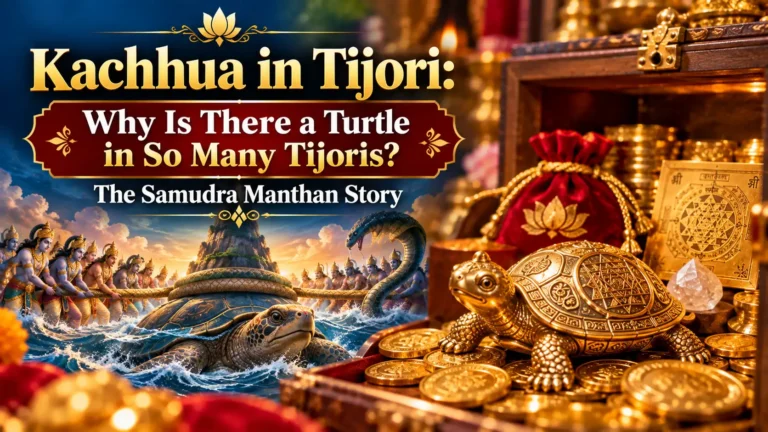
Want to know why a turtle and a shankh often sit beside the potli? Read why there’s a turtle in so many tijoris.
Bringing the Potli Back This Diwali
This is exactly why we put together the Dhan Laxmi Potli. It carries the classic items your elders would recognise (kaudi, kamal gatta, four gomti chakra, a Kuber key) plus a brass Shree Yantra, raw pyrite, a Zibu coin and a small citrine tree for your desk. All twelve items come in a red velvet potli with a Laxmi print, energised by Vedic pandits before dispatch.
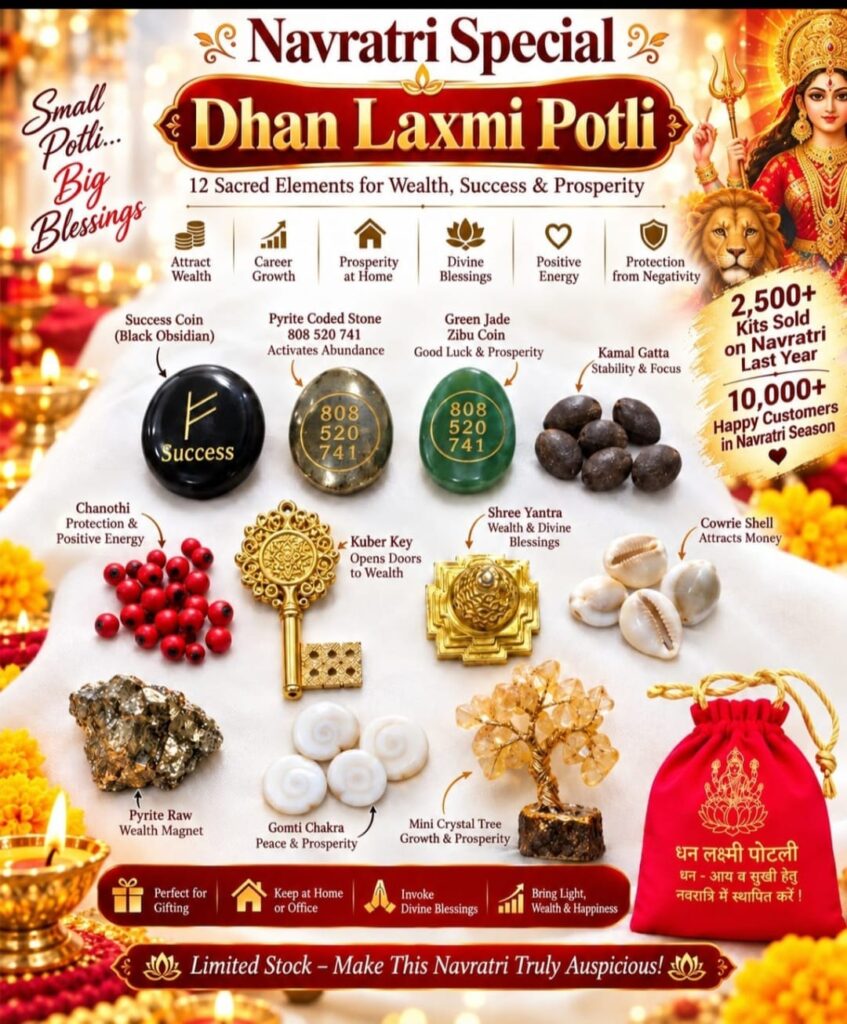
This year Dhanteras falls on a Friday, 6 November 2026, and Friday is Maa Laxmi’s own day. It’s a fitting time to start a potli of your own and tell your children what each item means. Read the full Dhan Laxmi Potli guide to see what each item means.
Did your family keep a potli? Tell us in the comments what was inside yours.
Frequently Asked Questions
Why do Indian families keep a red potli in the tijori?
The potli was the sacred part of the home treasury. It held symbols of barkat such as kaudi, kamal gatta and gomti chakra, tied in red cloth because red marks shubh beginnings and is linked with Maa Laxmi.
What is traditionally kept inside a Laxmi potli?
Common items include kaudi (cowrie shells), kamal gatta (lotus seeds), gomti chakra, a Kuber key and a silver coin, often one bought on Dhanteras.
Why is red cloth used for the potli?
Red is the colour of sindoor, the bride’s saree and the cloth under the puja kalash. It marks things as auspicious, and Maa Laxmi is often shown in red.
What should I keep in the tijori for money on Diwali?
Traditional choices are kaudi, kamal gatta, gomti chakra, a Kuber key, a Laxmi shankh and a silver coin, kept in a red cloth or potli.
When should I start a new potli in 2026?
Dhanteras on Friday, 6 November 2026 is a fitting day, since Friday is traditionally Maa Laxmi’s day. You can include it in Lakshmi Puja on Diwali night, Sunday 8 November.
Note: These are traditional, faith-based items. No specific result is guaranteed.